The 1964 musical Fiddler on the Roof is a masterpiece, emerging at a moment in time when the loss of Jewish Eastern Europe demanded nostalgia. Moreover, it emerged at a moment when Jewish stories were not the stuff of mass media. In archival footage from PBS, Sheldon Harnick and Jerry Bock say they tried to make Fiddler a universal story, and even so, they were warned that it wouldn’t be relevant. How wrong those naysayers were. Since the show debuted on Broadway in 1964, there has not been a single day when it has not been in production somewhere in the world. Fiddler became a global sensation, and today the show continues to find audiences through a Yiddish adaptation translated by Polish Jewish theatre actor Shraga Friedman in 1965.
The Yiddish Fiddler is an unforgettable journey to the world of Anatevka, ca. 1905, which has never been more vivid or alive. The Yiddish Fiddler is more idiomatic, more poignant, and far funnier than the English. And it takes an altogether more archival approach to the script and songs, diving into the repository of liturgical Jewish visions of deliverance, idiomatic turns of phrase, and markers of Jewish sensibility that heighten the show’s ironic sarcasm, sharpen its humour, and deepen its poignancy.
“If I Were a Rich Man” is adapted as “Ven ikh bin a Rotshild” (If I Were a Rothschild), taken from a 1902 monologue of the same title by Sholem Aleichem. Tevye doesn’t want to be just any rich man; he dreams of being a Rothschild—the nineteenth century banker, whose status was legend for the impoverished Jews of the Pale of Settlement. Tevye wishes he had a “daydl baytl gelt” (a little wallet of money) which would make him a “zeydl eydl man.” “Eydl” means noble, genteel, refined; “zeydl” is a play on “zayd,” silk. So, he wishes he were not just wealthy, but refined, elegant as silk. And the song nears its end with Tevye wondering where and when a dream like this could ever come true — “Efsher in undzer heylik land?” (Perhaps in our Holy Land?). It will never materialize for him here, in Anatevka—but a man can dream, and Tevye’s dream of redemption is bound up with a collective sense of the Jewish redemption awaiting them all. Part of his dream of stature is also to be regarded as an authority among learned men. He dreams they would ask him tough questions—“af di shayles oykh der rov di peyes dreyt” (questions that cause the Rabbi to turn his peyes).
"Neyn, mit an aleph!” (No, with an aleph!) protests Tevye at hearing of Hodl and Pertshik’s engagement. (“Neyn” has no aleph, but “loy,” from the Hebrew lo/no does.) “Hefker tsibeles!” exclaims Tevye at the news that Tsaytl and Motl have made their own shidekh themselves. It translates as something like “stray onions,” but here means “absurd.”
Even Pertshik, the incorrigible but charming revolutionary who cannot tolerate the shtetl’s provinciality, declares (in the Yiddish) that capturing Hodl’s heart is “bashert,” destined. “I have a little bit more besides having everything / I know what everything’s for” is rendered in Yiddish: “Besides that I have the world / you were also for me destined” (bashert). Even Pertshik, fed up with the traditions and folk beliefs that govern shtetl life, cannot resist capitulating to the idea of predestined love. (This tension sits at the heart of the most famous Yiddish play ever written, Sh. An-sky’s The Dybbuk.) Pertshik may be changing the shtetl in certain ways, but the shtetl had changed him too, in ways he never expected.
The Yiddish Fiddler also dives into the archive of vernacular Jewish prayer. In the scene around the shabbes table, Friedman rewrites the prayer with Jewish liturgical imagery. The Yiddish dives into the archive of vernacular Jewish prayer, a body of text known as tkhines. “Tate ziser got fun Avrom,” it begins, “Sweet father, God of Abraham,” rather than “May the Lord protect and defend you.” Here too we find the messianic longing so common in Jewish liturgy. Compare the lyrics:
English:
May the Lord protect and defend you
May he always shield you from shame.
May you come to be
In Isroel a shining name.
Yiddish:
Sweet father, God of Abraham
The Messiah should come quickly
Because waiting for him is
The entire people of Israel.
What’s more, the Yiddish grants us entry into the interiority of Tevye and Golde, who long not only for good matches for their daughters, but for those matches to one day yield grandchildren. This is about legacy, and the Yiddish makes that clear:
English:
May God make you good mothers and wives
May he send you husbands who will care for you.
May the Lord protect and defend you.
May the Lord preserve you from pain.
The Yiddish:
When will we live long enough to have grandchildren?
Sabbath there should be no room at grandfather’s table.
Dear father, God of Abraham
Hear the voice from our home.
The last line is especially evocative: the English has “ Oh, hear our Sabbath prayer.” The Yiddish: “malakhey hashoreys” (“ministering angels” — directly drawing on the classic liturgical poem “Malakhey Hashalom.”)
Messianic yearning for return to the Holy Land, which features much more prominently and more often in the Yiddish Fiddler than in the English Fiddler, may come down to Shraga Friedman’s own historical moment, which saw the establishment of the state of Israel, which some viewed as the long-awaited fulfillment of the promise of redemption. Born in Poland in 1923, Friedman was a Yiddish theatre actor and writer who immigrated to mandate Palestine before the war. In 1965 he secured permission from the original creators to translate the show into Yiddish. It did not do well: Yiddish theatre in Israel, while not prohibited, was suppressed. Friedman died in 1970 at the age of 46, having never seen his translation become a full-fledged production.
But the original Yiddish stories behind this musical were also infused with a sense of a destined to return to the Jewish ancestral homeland. Sholem Aleichem was a Zionist, and his portrait of Tevye and his daughters—contained within six short stories published serially over a twenty-year span, from 1894 to 1914—end with Tevye explaining why his plans to make pilgrimage to the Land of Israel were thwarted:
“Just think of it: there I was with one foot practically in the Holy Land already—I had only to buy a ticket, board a ship, and heigh-ho!—when what does the good Lord decide to do? It shouldn’t happen to you or anyone, but one night my son-in-law, Motl Kamzoyl, the tailor from Anatevka, gets into his head to go to bed well and wake up dead in the morning…How could I even think of a pilgrimage to the Holy Land when I had a house full of little pilgrims myself?”
He explains that before leaving he’d sold his belongings—his horse, his cows—and even Beilke’s wealthy husband (who’d made a fortune as a war contractor) went broke; to flee his creditors, the two of them have run off to America, where they work in sweatshops, making socks. Tevye is left very much the way readers first met him in 1894: with many mouths to feed, and not much to feed them with. In the end, we are left with an ellipsis: “Say hello for me to all our Jews and tell them wherever they are, not to worry: the old God of Israel still lives!…” The stories end with Tevye not bound for America with his family, as in the musical, but perhaps more tragically, evicted from his little town (called Kasrilevke in the stories), his daughters all married off and moved away (except the widowed Tsaytl and her children), and his beloved wife Golde having passed into yener velt (the World to Come).
Fiddler, of course, concludes differently, with an ending that is by turns more and less tragic. What is in store for Hodl and Pertshik, on the frontlines of the Russian Revolution? Or for Tsaytl, Motl, and their baby, headed for Warsaw? Or for Khave and Fyedke, bound for Krakow? We know only too well.
Perhaps that is why the Yiddish Fiddler resonates so deeply. The audience watches a community standing at the edge of disappearance while speaking in a language that itself narrowly escaped disappearance. The result is not just nostalgia for a lost world, but an encounter with what remains vibrant: its jokes, its prayers, its dreams of redemption, its stubborn faith in the future. In Yiddish, Fiddler sounds less like a story about the past than a conversation with voices that are still speaking.
The Yiddish Fiddler on the Roof is playing at the Elgin Theatre May 25-June 7, with supertitles in English and Russian. directed by the legendary Joel Grey, with spectacular choreography by Staś Kmieć, and produced by New York’s National Yiddish Theatre Folksbiene (the longest continually operating theatre company in America) and Toronto’s own Harold Green Jewish Theatre.
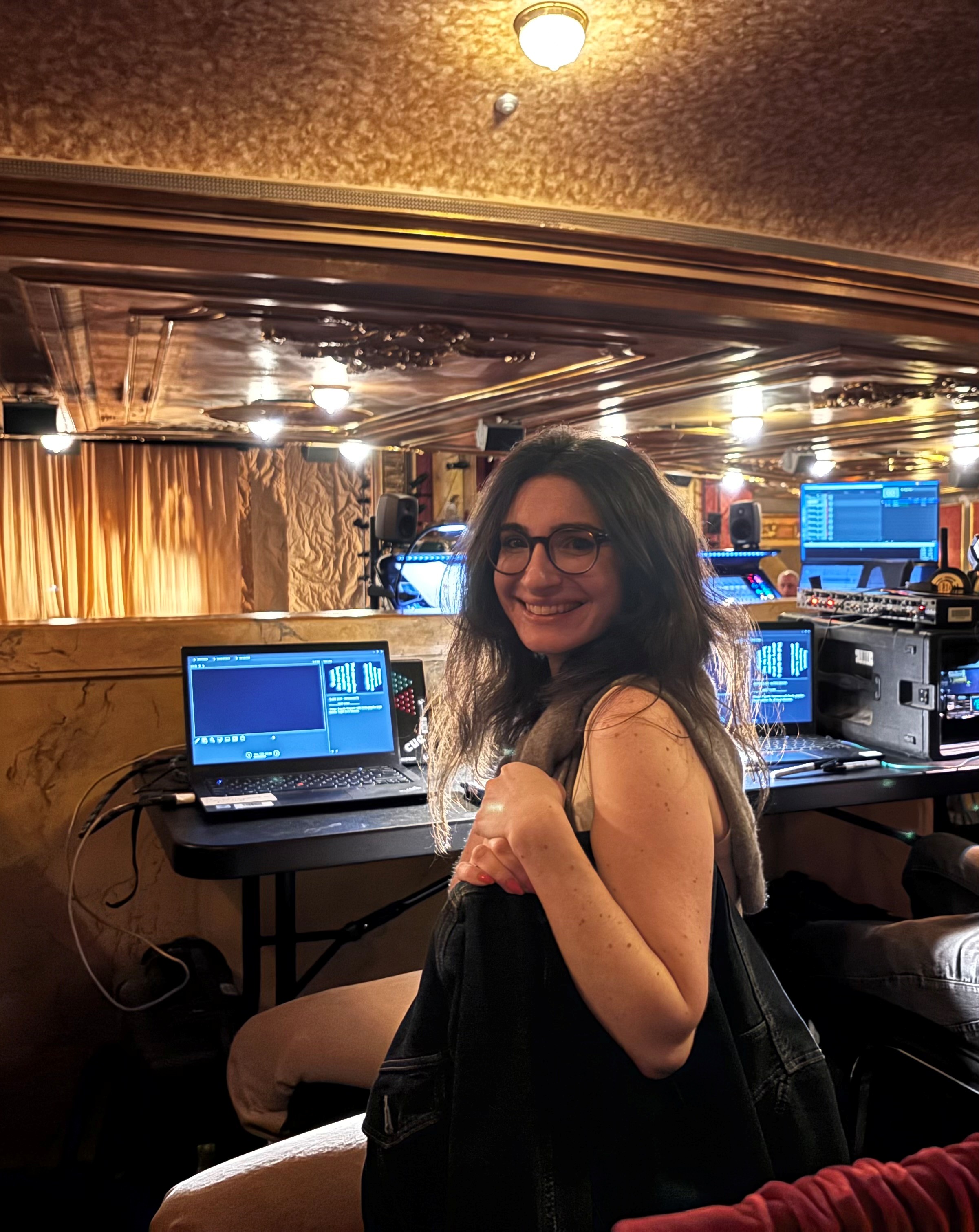 Miriam Borden is completing her PhD in Yiddish Studies at the University of Toronto. She teaches courses in Yiddish literature and culture, and is currently translating the poetry of Shimen Nepom, Toronto’s best known Yiddish poet and a streetcar conductor for the TTC from 1917-1939. For the Toronto production of Fiddler on the Roof in Yiddish, Miriam is supertitle operator listening very carefully to every bit of dialogue and lyrics sung ensuring the supertitles align throughout each three-hour performance. She is pictured here in the control booth, Elgin Theatre, Toronto, May 2026.
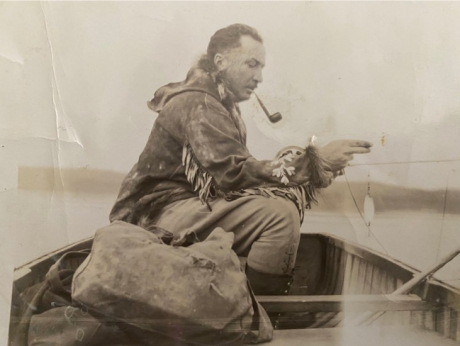
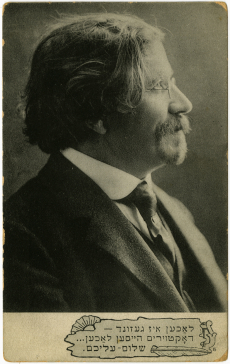
 I began my journey at the Ontario Jewish Archives as a volunteer following the completion of my Master's of Information at the University of Toronto's Faculty of Information with the hope of gaining hands-on experience working in an archive. I was eventually brought on as a contract archivist for a particular project: processing the United Ostrowtzer Hilfs Committee collection.
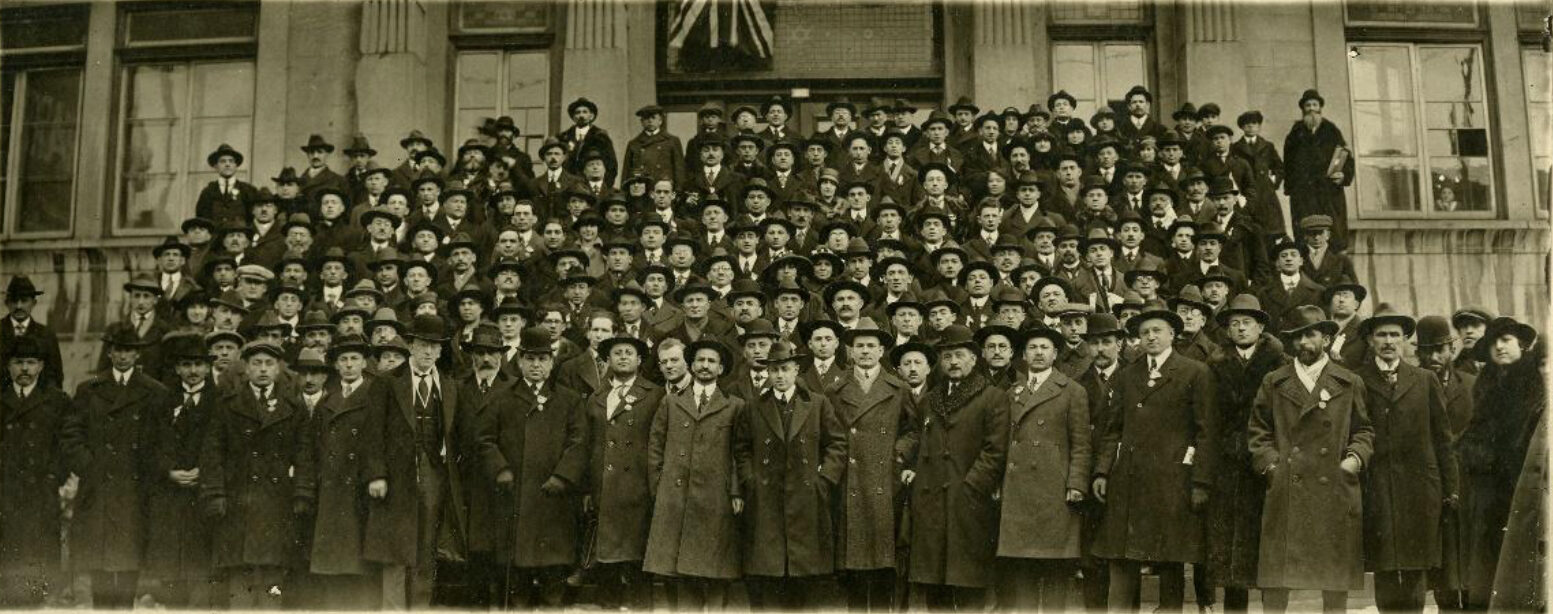
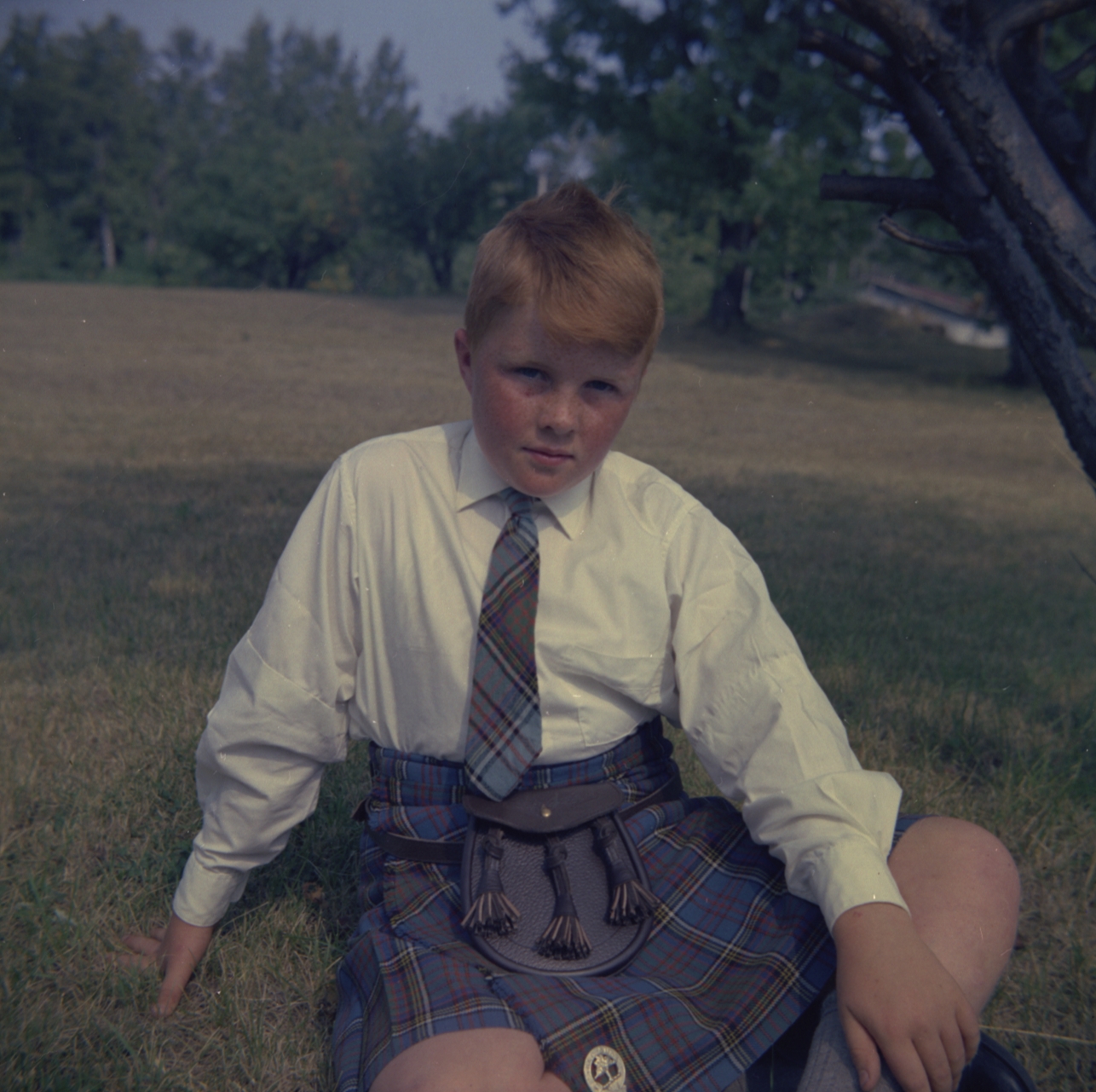 Not all of us are born into our families. In my case, and in the case of my adoptive dad, David Gruber, our families are mostly made up of people who chose one another; assemblages of dear friends, and often times their families. I grew up hearing fantastic tales of my dad’s Aunts Sylvia, Ruth, and Jewel Schwartz, and friends and extended families within the Toronto Jewish community. Stories of Jewel’s shop and the artists who moved through their lives, halcyon summers at the family cottage in Bobcaygeon where kids were free to fish and swim and canoe and roam under the watchful eyes of adults, the very best of life, days we would all live for.
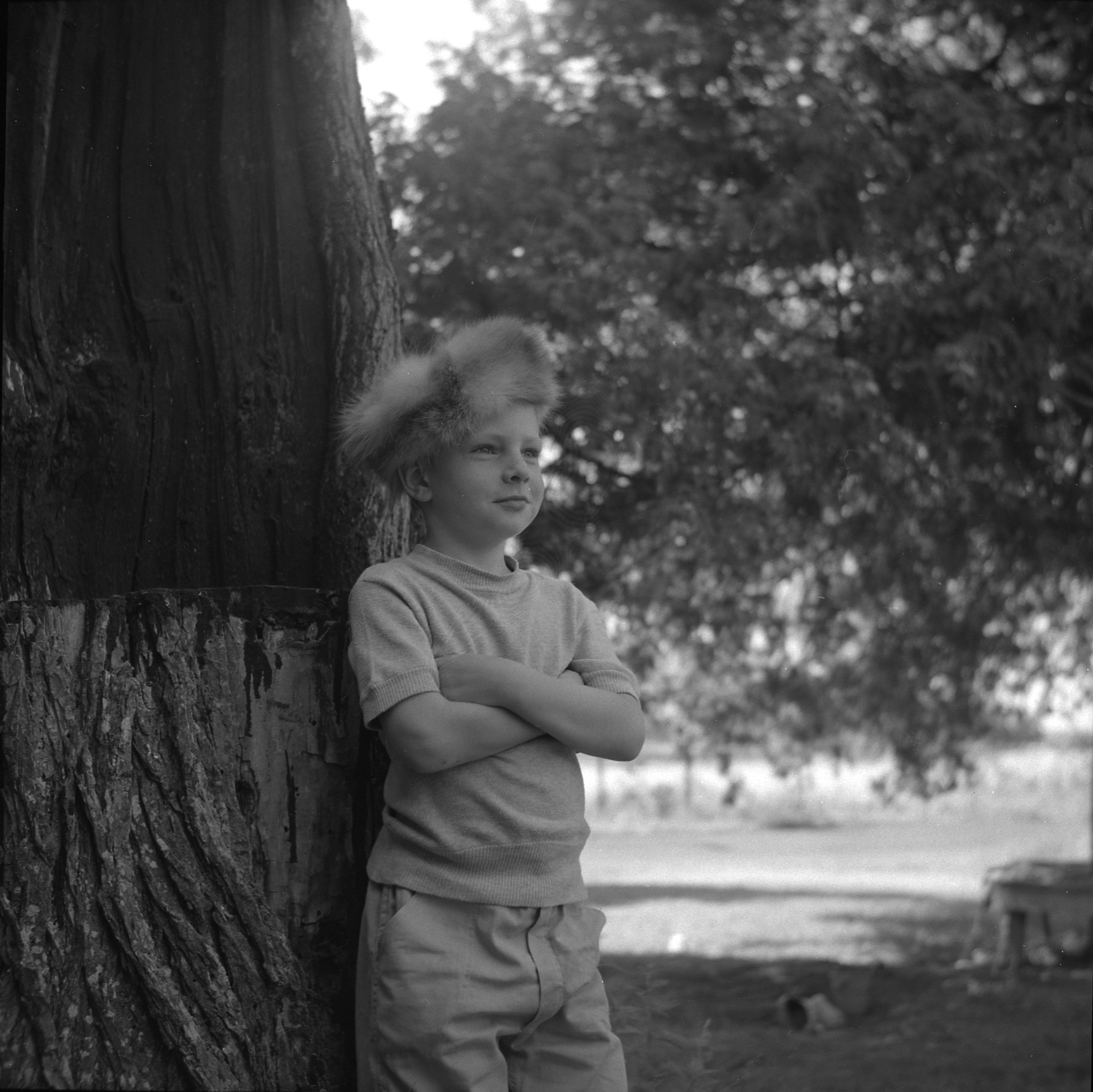 When David – who I met when I was just 14 - died in March of 2022, the vacuum of loss he left behind led me on a search for ties to his past. Who he was and where he comes from has become who I am, and where I will go. The reach of my words ends when I think of the day I found these photos of my dad, digitized, and preserved by the Ontario Jewish Archives. His memories were suddenly made real. These documents, and photos of people’s lives, with their loves and their losses are alive in the stories we can tell and pass along. The world is a better place for having had them in it, and I believe it remains good with each remembrance of them.
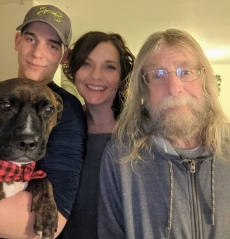 Andrea Taylor is completing a thesis for a Master of Arts in Disaster and Emergency Management while working with the Canadian Red Cross 2021 BC Floods Recovery Team. She and her rescue dog live next door to her son at their home in the west Kootenays.